Quality and Free Coast to Coast

A student once asked me if they ‘really’ needed to buy our course textbook, hoping to buy a pair of children’s birthday shoes instead. I loaned the text. About that time I met David Porter, Ed.D. and learned about Open Education Resources (OER’s i.e. good quality and freely accessible textbooks). Since then I have been an advocate for OER’s and the idea of students curating them.

We have made lots of OER progress in Nova Scotia including at Nova Scotia Community College – NSCC, of which I am very proud. Today, in the middle of Open Education Week, my appreciation goes to British Columbia and open.bccampus.ca. Thank you for leading the way!

Check out the BC story about their 10 year journey with OER’s and then check back here for NS news in a couple of years. Quality, free, and coast to coast!

#education #students #community #accessability #democratizingeducation

Labour of love

It’s September! While we respect (today) Labour Day as a day to celebrate workers’ rights, we also get excited about tomorrow when we get to practice our trade. At least I do. I’m a teacher and school’s back baby! I’m giddy with excitement. Microsoft Teams was great but now we’re back to face-to-face teaching and learning.

Now I get to do really important work with amazing real (aka not digital) people in an amazing real building (aka not my home office). Digital tools bailed us out and are here to stay but real people face-to-face is where its at for me now! I’m ready now. It just doesn’t get any better than that. Pinch me!

I’m feeling really good about what post pandemic teaching and learning will be like. Welcome back!!!

Jane and Jack the Ripplers

When presented with new challenges or opportunities people often say something like, “I’ll get to that when things settle down.”  No, they won’t.  That response generally means they’re more focused on the now and not embracing the future.  They’re like still water.  Successful organizations, teams, and individuals are in a constant state of change.  They’re like rippling water.

There are lots of good reasons why organizations, teams, and individuals don’t change.   Fear of the unknown is a common reason cited.  People are often in a comfort zone where their desire to change is outweighed be whatever is holding them back.  They’re stuck.  They need a rippler.  

Say, for example, there’s a new system being implemented at a workplace.  The old system has been in place for many years, and a common lament from team members is, “it works just fine.”  For them to leave their comfort zone and embrace the new unknown system something special needs to happen.  Most importantly they need to see movement towards the new system by their leaders and their teammates.  They need to see the ripples of change.  That’s not an easy thing to create but it can be done.  Its called change management.

There are many change management theories and methodologies.  They are generally grounded in social science and are often both academically pure and commercially successful.  Many PhD’s have been earned answering questions about change management and many consulting fees have been paid for helping to manage the people side of change. One common theme seems to be that someone needs to start the change wave which is sometimes referred to as change sponsorship.  The higher up the organizational hierarchy, the better the impact of change sponsorship, but it needs to start somewhere.  Someone needs to drop a pebble in the still water and make the water move for others to notice. That’s when their desire to participate in the change increases, and generally that’s when they begin to “get it and get with it.”  There needs to be a rippler. 

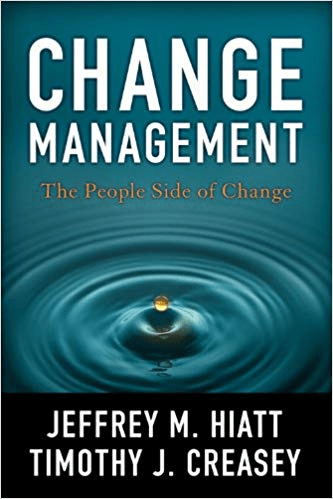
So, ask yourself, when it comes to change are you a rippler?  If you think you might be, then consider learning more about change and change management.  There are many great resources available to help you become a change manager.  Dr. John Kotter developed a highly regarded change process as did Jeffrey Hiatt and Tim Creasy who founded a research and training organization dedicated to change management.  Check out their stuff.  Maybe you’ll become a (better) rippler!

Do Canadians believe in education?

Most Canadians believe post-secondary education positively impacts the country, is more relevant in today’s rapidly changing world, and makes us stronger in the face of new challenges. A new national survey conducted by Abacus Data for the Canadian Association of University Teachers offers some interesting insights including that 78% of Canadians believe public sector education (PSE) positively impacts the direction of the country

Most Canadians believe PSE is more relevant now than ever. A full two thirds agree that it has never been more important to get a post-secondary education now given the changes in the economy and society.

When told that Canada has the highest rate of residents with a post-secondary degree among comparable countries, two thirds of respondents feel it makes Canada a better place to live, a view that’s held across demographic, regional, and socio-economic groups. Given the importance of PSE in the eyes of Canadians it is likely that it will play a prominent role in the upcoming federal election. Although a provincial jurisdiction, federal policies supporting the sector are likely to be a focus. For more information visit Canadian Association of University Teachers, http://www.caut.ca July 23 post. Photo credit widehdimages.

Reflect yes, but don’t beat yourself up

Dwelling on missed opportunities or mistakes is human nature.  A colleague recently lamented that she had left a great job to find a better one, only to realize that the grass was much greener in her original position.  She repeatedly regretted her decision and in some ways was paralyzed by it.  Researchers have found that obsessing over regrets has a negative impact on mood and sleep, can increase impulsivity, and can be a risk factor for binge eating and misusing alcohol (Taitz, 2019).

Abstract lights

Participant memories about negative career experiences were quite clear – even those long ago.  Reflection should be positive.

When asked about career regrets in a study of Canadian technology executives the most common answer was denial of negative reflection, “Oh I don’t dwell on  the past” (Fauteux, 2017).  When pressed during interviews, participants described a range of regrets including assignments not pursued, transfers not accepted, promotions not lobbied for, and other moments in time that could have been (better).  Their memories were quite clear about decisions made long ago.  No doubt you have some career regrets, I do! Its important not to let them get a hold of you.

Psychologists suggest that in order to avoid regret spiral you need to interrupt your negative thought pattern and look to the positive.  Taitz, 2019 describes this as interrupting your obsessing and treating yourself like your ideal mentor would.  Don’t beat yourself up – practice self compassion.  Her science explains once again what we know intuitively but sometimes can’t put into practice – see the sliver lining.  Life long learners who use reflection may know this best – there is positive value in every experience.

Kintsugi is a Japanese art which literally translated means “golden repair.” It is a philosophy of repairing broken things, including imperfections which are considered part of an item’s history.  So, life long learners, take time to reflect, look for the positive in every experience, and repair the broken thing(s) which are part of your career.