RIP Lou Gerstner – IBM Whisperer

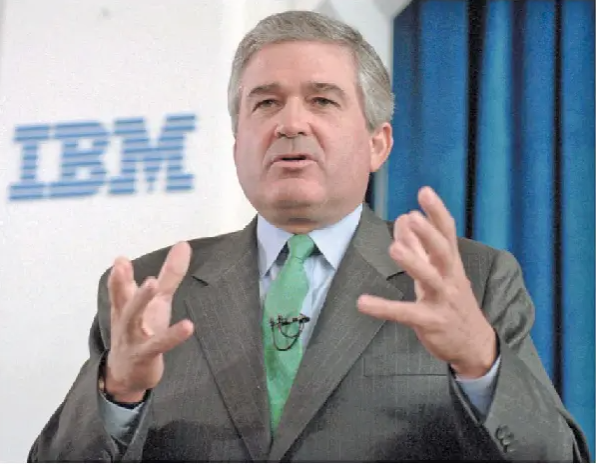
I was saddened to hear of the passing of Lou Gerstner who was CEO of IBM beginning in 1993. He was a powerful force and the first IBM CEO recruited from “outside.” Arguably he saved the company.

For those who didn’t live through it, it’s hard to convey just how close IBM came to disaster in those days – before Lou arrived. I was there. We knew we had a problem. The question was whether we were willing to face it.

I remember a meeting of Canadian sales managers – Toronto, circa 1990 – where a senior executive opened the event by reading a sombre ‘press release…’ IBM was being purchased by a Japanese company. Job loss was inevitable.

You could hear a pin drop.

After a few heavy minutes, the charade was exposed – it wasn’t real. “This could happen, and it will if we don’t change” we were told. It was a powerful lesson in creating a true burning platform.

I joined IBM Canada as a Sales Representative and Sales Manager in 1981, before Lou took the helm. A decade later I later became National Manager of Market Driven Quality. I was on the turnaround team. I remember organizing customer focus groups across Canada. Many were brutal. Customers were angry. We had stopped listening – and it showed.

The crisis wasn’t only cultural. We also failed to fully understand the rise of the PC and the importance of selling services. Big Blue sold big iron. But the market had already shifted. Lou Gerstner understood these forces. He knew that transformation requires a sense of crisis. He forced IBM to confront reality – and change.

IBM was my first real job, and an incredible one for which I am truly grateful. Great customers. Exceptional colleagues. Superior products. And a front-row seat to a remarkable turnaround.

Rest in peace, Lou.

Image Source: Globe and Mail and Kathy Willens/ Associated Press

Lou Gerstner Speaking

Spark followers with respect for a leadership turnaround

Extinguishing leadership behaviour is said to demotivate a team – like putting water on a fire. Whether you study leadership or not that can be a painful thing to observe and worse to experience. The ‘fire inside’ individuals weakens, and the energy level among the team members is drained bit by bit. Sadly, it happens a lot especially when managers are not well suited for the job. Which also happens a lot. In most organizations there are heroes who help the team push past the leadership void. And sometimes there are leadership turn arounds where the extinguishing behaviour is discovered and ended.

In large matrixed professional organizations there can be many leadership successes as well as gaps and inconsistencies. Followers increasingly hold their leaders to account including how leaders carry themselves – how they set the tone. Science suggests good followship in a professional setting involves followers asserting themselves. Good leaders get the message but what happens when they don’t? One possibility is that trust for the leader erodes. A feeling of futility among the followers fuels a leadership death spiral and eventually the leader’s messages fall on deaf ears. When a leader is tone deaf to how their team is feeling about their leadership the team finds a new de facto leader for matters not requiring position authority. Follow-to-rule attitudes develop – kind of like work-to-rule but of the heart and mind not the body. As a leader s/he’s “dead to me” becomes more palpable. It stands to reason in this situation that the team’s performance would decline.

Don’t extinguish. Spark the fire inside (Source: https://alchetron.com/Spark-(fire)).

There’s another narrative that could emerge from a leader’s failure to spark their followers – when leaders who aren’t leading well do get the message from the assertive unhappy professionals. The starting point for this better leadership story is a leader head-shake and acceptance of the likelihood that something’s wrong and its time to eat some humble pie. The key ingredient here is respect.

When leaders become disconnected from the team and followers show signs of declining trust maybe its time for some simple respectful listening by the leader. “You’ve stopped speaking up. We need you to speak up or we’ll lose the customer perspective. I’m not sure I’m giving you what you need or supporting you the way you need right now. What do you need from me as a leader?”

There’s no script for these situations – they’re all different but the starting point is the realization that, its (probably) you leader! Take a deep breathe and respect the years of experience on your team, especially in a professional setting where the followers often know much more about the core business than you do as leader. If its not your style as leader, if you’re an introvert in a sea of extraverts for example, then get to work on how you can warm up to your team of professionals. Learn and practice listening with respect. Leaders in tough situations like this had better figure it out fast or risk the death spiral of ‘follow-to-rule’ among your team of professionals. Listen, feed the fire, and make it a leadership turnaround instead of becoming ‘dead to them.’

Patagonia Doubles Down on Planet

I was pretty excited last week with the news of Patagonia’s Yvon Chouinard essentially giving away the company to a tightly managed trust committed to his dream of saving the planet. While I haven’t researched the news other than casually it seems super impressive that he took such a bold step now.

Chouinard is not the first business leader to take such a non-monetary long-term unorthodox view. Apparently ‘giving away the farm’ to save the planet is all the rage in Europe and the Nordic countries. My students quickly pointed out the tax savings it would bring to Chouinard and his family. But overall they paused to think how they could one day offer a similar gift.

If you’re like me you might marvel at how someone can be so focused. Chouinard has been saving the planet his entire life. Wow. One single focus. That’s impressive. Its inspiring to have leaders like him to study and hopefully to model. What the world needs now is more than just people marveling at the bold moves of others. We need to make some bold moves our selves.

Lots of things are different now. If you wanted to participate wardrobe is as good a place to start as any. After all you are what you <insert wear>. Your wardrobe might become smaller as you give it away to those more needy. More of your wardrobe in future might be like Patagonia’s – more function than fashion. But wardrobe is not the point! One could change life style – being more outdoors and grounded. A big change for some could be much more biking and a lot less motoring. Ultimately Chouinard has challenged us all to think about this rock and how we either save it or kill it. I chose to save it – or at least try. I’m going to figure out how I can best do that now. Thanks for the push Yvon!

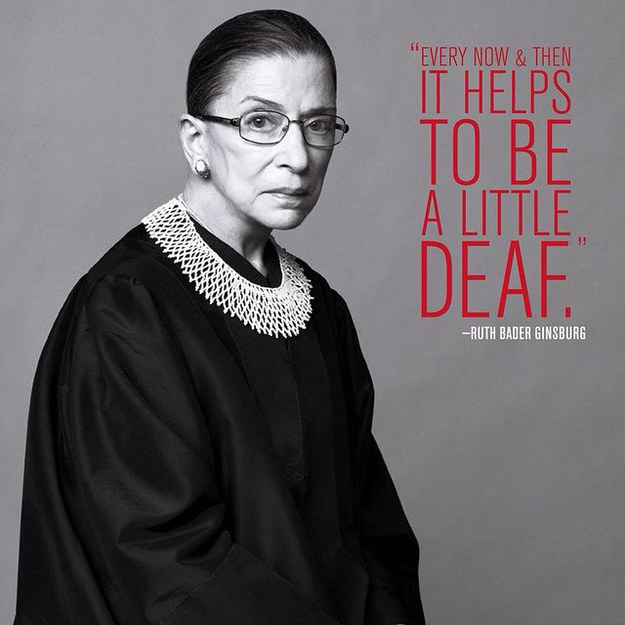
“Sometimes it helps to be a little deaf”

If you believe what the media has been reporting about The White House lately (and it’s hard not to) there’s a lot of lying going on in Washington. And there may be a lot more to come. Isn’t it ironic that one of the greatest truth finders of our time will be watching it all from a bench too far? Ruth Bader Ginsburg (RBG), ‘lying in state’ are words of sadness.

Whenever a new US Supreme Court Justice is confirmed s/he will no doubt quickly make a supreme impact on the world. In a time of increasing volatility, uncertainty, complexity, and ambiguity policy makers are facing decisions which call for new ways of thinking in response to our new ways of being. S/he will have a difficult job to do.

Navigating in these times will continue to be tough for everyone and there will be many appeals to the supreme court – in search of truth.

These days while people go to their corners and get ready to disagree on what can be very important conversations, it might be wise for us to practice something RGB taught us. When asked about keys to success in life, she once said, “Every now and then it helps to be a little deaf.” She seemed to be speaking about more than just family relationships. She may have been foreshadowing the growing need for tolerance in society and the value of self reflection rather than instantly voicing dissent.

Together with her colleagues, RGB left the world a rule book for the bigger questions, the more important moments, the ones with right and wrong answers. Alas our world is full of smaller questions and many more casual moments with less definitive answers. And they sometimes seem to be full of lies. Many of society’s conversations these days could be de-escalated by each of us being more tolerant of other perspectives, by more turning of a cheek, and as Ruth suggested, by being a little deaf from time to time.

Public Service leadership – Peter Principle debunked

Peter Lawrence had it all wrong. His popular management theory that people in a hierarchy tend to rise to their level of incompetence has been debunked, at least for current Canadian public service leadership. The global pandemic has tested leadership skills to the max. A scan of recent leadership polls suggests that ratings are up for political leaders during this time. There is less empirical evidence about how public service officials are seen to be performing. From my perspective, the performance of Canadian public service leadership has been nothing short of exceptional.

Over the past few decades, Government human resource management systems seemed to have successfully landed the right Chief (Public) Officers in the right jobs at the right time. Either that or we just got lucky which is less likely. With such a colossal shift in world order, many public sector leaders have suddenly found them selves in the limelight. Roles which were previously considered support have, almost overnight, become core. And the incumbents were ready. The right people seem to have won the job competitions. The leadership development training seems to have worked.

Peter and Hull’s landmark study which gave birth to the “Peter Principle,” argued that an employee is promoted based on their success in previous jobs until they reach a level at which they are no longer competent. They asserted that, in time, every position tends to be occupied by a leader who is incompetent to carry out its duties. That’s not what I see right now. Quite the opposite, our public sector leaders seem to have risen to the level of super hero. Peter Laurence was a Canadian educator who died in 1990 but his theory lives on in infamy. Thankfully, Canadian public service leaders are proving him wrong today.