How to Miss The Point – Completely

I wrote a piece earlier this year about how Canada and the U.S. could actually improve their relationship and come out ahead – both sides. A good old win–win. But if the last year has shown us anything, it’s that Trump’s idea of trade is more like win–lose. And most Canadians I know (myself included) are not impressed.

Instead of working things out or trying to understand how tightly our economies are linked, he went full steam ahead with tariffs and tough-guy talk. Steel? Tax it. Aluminum? Tax it. Finished goods? Throw a duty on those too. It’s like someone walked into a dinner party, flipped the table, and called it strategy.

Canadians are polite, but we’re not pushovers. And this kind of move – bullying trade partners with zero finesse – just made people angry. It made me angry. Tariffs don’t magically bring jobs back or fix supply chains. They mostly just make things more expensive and strain relationships. And if Trump thinks that’s a win, I think he’s missing the big picture.

Bruce MacKinnon’s brilliant cartoon in the Chronicle Herald really sums it up:

Image Credit: Bruce Mackinnon https://x.com/CH_Cartoon/status/1886189236644188279

It’s like we’ve taken decades of steady trade, teamwork, and peace-of-mind between Canada and the U.S. and tossed it out the window for cheap political points. Newsflash: Canadians notice. And we don’t love being used as a punching bag for someone else’s ego.

There are real people on both sides of the border who just want to live, work, build, and trade. We don’t need drama. We need leaders who understand the difference between strong leadership and needless conflict.

Here’s hoping for better days – and better neighbors who see the big picture.

Sometimes – Just a little push…

A senior executive once described her career as “remarkably tougher than that of my male counterparts. All of them.” Science says she’s in the majority, at least when it comes to male dominated sectors of which there are far too many. Research says senior executive women in the technology sector feel career drag because of their gender (Fauteux, 2017). Progress has been made but the gap persists. Like many I look forward to the day when the reality of equity and diversity is here. Alas it’s not here yet. You don’t need to look far to find local examples of what is all too visible around the world. Its tough for women and girls.

We know that there is a gender gap in the tech sector, especially in the senior ranks, yet we seem powerless do do much about it. One reason we sometimes avoid the ‘dirty little secret’ relates to our fear of overcompensating. ‘If our affirmative action goes too far then we’d just tip the scales the other way and that’s not equity, yada yada.’ So we do less or little.

Today on International Women’s day lets try to “give a little push” to what seems to have been screwed up otherwise. Lets find small (and big) ways to tip the scales more towards equity for women and girls, and in general. Let’s say something or do something that might feel uncomfortable to us in the interest of advancing women. These suggestions are especially for men, today, but they apply to everyone always (at least a bit).

Try using pronouns in your stories of ‘she/ her’ instead of ‘he/him.’ When you tell a story about Steve Jobs, mirror it with a story about Ursula Burns. When you walk into a room of 90% women, notice that, and do something to make it better. If you have oversight of salaries take a closer look to ensure your organization has achieved pay equity and not just talked about it. And finally, offer opportunities and encouragement to women and girls. Sometimes just a little push in the right direction can make a big difference.

I can’t write a post to support women on International Women’s Day without acknowledging two especially amazing women – my wife Mary and my daughter Julia. I am blessed to have you in my life. We are all blessed to have you in this world. Thank you for being my inspiration and for being shining examples of hard work, dedication, and love.

Photo Credit http://www.isCute.com

Quality and Free Coast to Coast

A student once asked me if they ‘really’ needed to buy our course textbook, hoping to buy a pair of children’s birthday shoes instead. I loaned the text. About that time I met David Porter, Ed.D. and learned about Open Education Resources (OER’s i.e. good quality and freely accessible textbooks). Since then I have been an advocate for OER’s and the idea of students curating them.

We have made lots of OER progress in Nova Scotia including at Nova Scotia Community College – NSCC, of which I am very proud. Today, in the middle of Open Education Week, my appreciation goes to British Columbia and open.bccampus.ca. Thank you for leading the way!

Check out the BC story about their 10 year journey with OER’s and then check back here for NS news in a couple of years. Quality, free, and coast to coast!

#education #students #community #accessability #democratizingeducation

Spark followers with respect for a leadership turnaround

Extinguishing leadership behaviour is said to demotivate a team – like putting water on a fire. Whether you study leadership or not that can be a painful thing to observe and worse to experience. The ‘fire inside’ individuals weakens, and the energy level among the team members is drained bit by bit. Sadly, it happens a lot especially when managers are not well suited for the job. Which also happens a lot. In most organizations there are heroes who help the team push past the leadership void. And sometimes there are leadership turn arounds where the extinguishing behaviour is discovered and ended.

In large matrixed professional organizations there can be many leadership successes as well as gaps and inconsistencies. Followers increasingly hold their leaders to account including how leaders carry themselves – how they set the tone. Science suggests good followship in a professional setting involves followers asserting themselves. Good leaders get the message but what happens when they don’t? One possibility is that trust for the leader erodes. A feeling of futility among the followers fuels a leadership death spiral and eventually the leader’s messages fall on deaf ears. When a leader is tone deaf to how their team is feeling about their leadership the team finds a new de facto leader for matters not requiring position authority. Follow-to-rule attitudes develop – kind of like work-to-rule but of the heart and mind not the body. As a leader s/he’s “dead to me” becomes more palpable. It stands to reason in this situation that the team’s performance would decline.

Don’t extinguish. Spark the fire inside (Source: https://alchetron.com/Spark-(fire)).

There’s another narrative that could emerge from a leader’s failure to spark their followers – when leaders who aren’t leading well do get the message from the assertive unhappy professionals. The starting point for this better leadership story is a leader head-shake and acceptance of the likelihood that something’s wrong and its time to eat some humble pie. The key ingredient here is respect.

When leaders become disconnected from the team and followers show signs of declining trust maybe its time for some simple respectful listening by the leader. “You’ve stopped speaking up. We need you to speak up or we’ll lose the customer perspective. I’m not sure I’m giving you what you need or supporting you the way you need right now. What do you need from me as a leader?”

There’s no script for these situations – they’re all different but the starting point is the realization that, its (probably) you leader! Take a deep breathe and respect the years of experience on your team, especially in a professional setting where the followers often know much more about the core business than you do as leader. If its not your style as leader, if you’re an introvert in a sea of extraverts for example, then get to work on how you can warm up to your team of professionals. Learn and practice listening with respect. Leaders in tough situations like this had better figure it out fast or risk the death spiral of ‘follow-to-rule’ among your team of professionals. Listen, feed the fire, and make it a leadership turnaround instead of becoming ‘dead to them.’

Patagonia Doubles Down on Planet

I was pretty excited last week with the news of Patagonia’s Yvon Chouinard essentially giving away the company to a tightly managed trust committed to his dream of saving the planet. While I haven’t researched the news other than casually it seems super impressive that he took such a bold step now.

Chouinard is not the first business leader to take such a non-monetary long-term unorthodox view. Apparently ‘giving away the farm’ to save the planet is all the rage in Europe and the Nordic countries. My students quickly pointed out the tax savings it would bring to Chouinard and his family. But overall they paused to think how they could one day offer a similar gift.

If you’re like me you might marvel at how someone can be so focused. Chouinard has been saving the planet his entire life. Wow. One single focus. That’s impressive. Its inspiring to have leaders like him to study and hopefully to model. What the world needs now is more than just people marveling at the bold moves of others. We need to make some bold moves our selves.

Lots of things are different now. If you wanted to participate wardrobe is as good a place to start as any. After all you are what you <insert wear>. Your wardrobe might become smaller as you give it away to those more needy. More of your wardrobe in future might be like Patagonia’s – more function than fashion. But wardrobe is not the point! One could change life style – being more outdoors and grounded. A big change for some could be much more biking and a lot less motoring. Ultimately Chouinard has challenged us all to think about this rock and how we either save it or kill it. I chose to save it – or at least try. I’m going to figure out how I can best do that now. Thanks for the push Yvon!

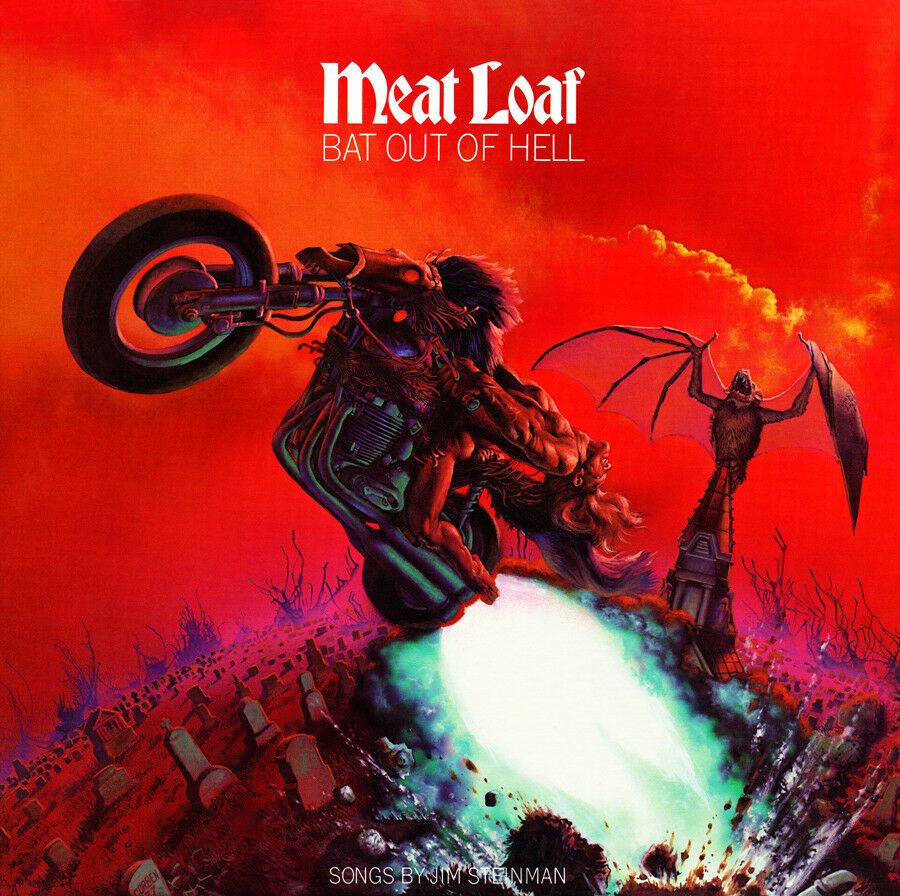
Covid Bat out of Hell

Going back may be tougher then leaving. That’s one way to consider the current pandemic precipice – where many say we’re on the verge of a new normal. Health officials seem cautiously optimistic. People are fed up with restrictions.  So, what does that mean for the average Jane in the medium term? It may mean a return to some form of normalcy. A return? Normalcy? 

For those who have maintained their grind over the past two years this may be just a moment in time. For those who went long on soft pants and take-out food, the looming transition may be a challenge. While many experienced the pandemic by stepping out and mitigating risks, others managed by staying home. It was a sensible and encouraged choice. “Stay the frig home.”  That’s now changing. Even those most able to isolate and work remotely over last two years will soon be seeing their situation differently.

It’s a form of coming out that we may all soon be experiencing. The film Poseidon Adventure (circa 1970) told the story of a capsized cruise ship and how some passengers survived the crisis. “There’s got to be a morning after. It’ll soon be right outside the door.” This post doesn’t advocate for an early or late coming out, rather, that a coming out is embraced. Period. And soon…

Meat Loaf, Bat Out Of Hell (Adam Bettcher/Starkey Hearing Foundation/Getty Images

Part of me believes there will be a post-Covid global celebration – despite the sad and senseless loss of life. Like ’Victory Day’ after a world war, people will dance in the streets post-Covid. There will be much revelry (in 2022 please). Until then it seems we will disagree as to when the transition back will begin and when it will end. Party or not, if we’re approaching the last dance at the Covid Ball its not clear who’s asking who to dance.  Some seem to be saying lets party now. But are they premature and did they forget the protection? Others are saying wait, the party can’t restart now, not yet. But are they just, well, weak?

Freedom is the ability to act speak or think the way you want without fear of reprisal. Freedom is no different post-pandemic than it was pre-pandemic (or in-pandemic). Freedom became better understood because of the pandemic. It could be said that we either enjoy freedom or we earn it.  In many ways its more difficult to be enjoying full freedom than it is to be limited by the lack of it.  It’s often harder to see the less visible big things than the obvious little things.  Soon most public health restrictions will decline more fully. Soon we will declare victory over Covid.  Hopefully we can handle the transition. We left our ‘normal’ suddenly. There was no choice, and we were scared. Let’s go back to our ‘new normal’ with hope, optimism, and community spirit.  Let’s (safely) get the frig out there!

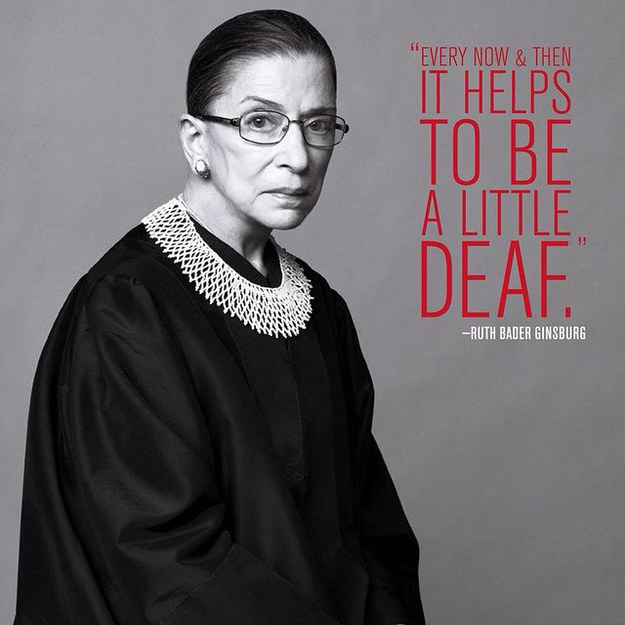
“Sometimes it helps to be a little deaf”

If you believe what the media has been reporting about The White House lately (and it’s hard not to) there’s a lot of lying going on in Washington. And there may be a lot more to come. Isn’t it ironic that one of the greatest truth finders of our time will be watching it all from a bench too far? Ruth Bader Ginsburg (RBG), ‘lying in state’ are words of sadness.

Whenever a new US Supreme Court Justice is confirmed s/he will no doubt quickly make a supreme impact on the world. In a time of increasing volatility, uncertainty, complexity, and ambiguity policy makers are facing decisions which call for new ways of thinking in response to our new ways of being. S/he will have a difficult job to do.

Navigating in these times will continue to be tough for everyone and there will be many appeals to the supreme court – in search of truth.

These days while people go to their corners and get ready to disagree on what can be very important conversations, it might be wise for us to practice something RGB taught us. When asked about keys to success in life, she once said, “Every now and then it helps to be a little deaf.” She seemed to be speaking about more than just family relationships. She may have been foreshadowing the growing need for tolerance in society and the value of self reflection rather than instantly voicing dissent.

Together with her colleagues, RGB left the world a rule book for the bigger questions, the more important moments, the ones with right and wrong answers. Alas our world is full of smaller questions and many more casual moments with less definitive answers. And they sometimes seem to be full of lies. Many of society’s conversations these days could be de-escalated by each of us being more tolerant of other perspectives, by more turning of a cheek, and as Ruth suggested, by being a little deaf from time to time.

Public Service leadership – Peter Principle debunked

Peter Lawrence had it all wrong. His popular management theory that people in a hierarchy tend to rise to their level of incompetence has been debunked, at least for current Canadian public service leadership. The global pandemic has tested leadership skills to the max. A scan of recent leadership polls suggests that ratings are up for political leaders during this time. There is less empirical evidence about how public service officials are seen to be performing. From my perspective, the performance of Canadian public service leadership has been nothing short of exceptional.

Over the past few decades, Government human resource management systems seemed to have successfully landed the right Chief (Public) Officers in the right jobs at the right time. Either that or we just got lucky which is less likely. With such a colossal shift in world order, many public sector leaders have suddenly found them selves in the limelight. Roles which were previously considered support have, almost overnight, become core. And the incumbents were ready. The right people seem to have won the job competitions. The leadership development training seems to have worked.

Peter and Hull’s landmark study which gave birth to the “Peter Principle,” argued that an employee is promoted based on their success in previous jobs until they reach a level at which they are no longer competent. They asserted that, in time, every position tends to be occupied by a leader who is incompetent to carry out its duties. That’s not what I see right now. Quite the opposite, our public sector leaders seem to have risen to the level of super hero. Peter Laurence was a Canadian educator who died in 1990 but his theory lives on in infamy. Thankfully, Canadian public service leaders are proving him wrong today.

Jane and Jack the Ripplers

When presented with new challenges or opportunities people often say something like, “I’ll get to that when things settle down.”  No, they won’t.  That response generally means they’re more focused on the now and not embracing the future.  They’re like still water.  Successful organizations, teams, and individuals are in a constant state of change.  They’re like rippling water.

There are lots of good reasons why organizations, teams, and individuals don’t change.   Fear of the unknown is a common reason cited.  People are often in a comfort zone where their desire to change is outweighed be whatever is holding them back.  They’re stuck.  They need a rippler.  

Say, for example, there’s a new system being implemented at a workplace.  The old system has been in place for many years, and a common lament from team members is, “it works just fine.”  For them to leave their comfort zone and embrace the new unknown system something special needs to happen.  Most importantly they need to see movement towards the new system by their leaders and their teammates.  They need to see the ripples of change.  That’s not an easy thing to create but it can be done.  Its called change management.

There are many change management theories and methodologies.  They are generally grounded in social science and are often both academically pure and commercially successful.  Many PhD’s have been earned answering questions about change management and many consulting fees have been paid for helping to manage the people side of change. One common theme seems to be that someone needs to start the change wave which is sometimes referred to as change sponsorship.  The higher up the organizational hierarchy, the better the impact of change sponsorship, but it needs to start somewhere.  Someone needs to drop a pebble in the still water and make the water move for others to notice. That’s when their desire to participate in the change increases, and generally that’s when they begin to “get it and get with it.”  There needs to be a rippler. 

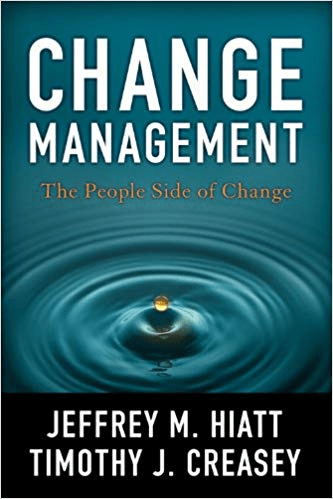
So, ask yourself, when it comes to change are you a rippler?  If you think you might be, then consider learning more about change and change management.  There are many great resources available to help you become a change manager.  Dr. John Kotter developed a highly regarded change process as did Jeffrey Hiatt and Tim Creasy who founded a research and training organization dedicated to change management.  Check out their stuff.  Maybe you’ll become a (better) rippler!

A shout out to social entrepreneurs

Social entrepreneurship is hot right now, especially among young people. Its evident in the class room when students talk about business and its evident from the growing numbers of social ventures in our communities. Social entrepreneurship is where monetary profit becomes a tool to accomplish people-centred objectives. More than economic activity, social entrepreneurs give society inspiring world-changing solutions. And we need them now more than ever. Social entrepreneurship matters because it maximizes social benefit for many rather than maximizing profit for a few.

A brilliant example of social entrepreneurship can be found in Hope Blooms who burst onto the national stage in 2008 winning the hearts of Canadians including most of the CBC Dragons. Only Kevin O’Leary was a hold out to their ask, sticking to his oft used excuse that he doesn’t invest in charity. He didn’t get it. Scrooge didn’t either until it was almost too late. The other Dragons were taken by the story, which is now regarded as one of the top ten Dragon’s Den pitches of all time. The Hope Blooms youth who made that first step were not unlike the ones who recently opened up the Toronto market so that Hope Blooms products can now be found at the Loblaws store in Maple Leaf Gardens. They are Halifax inner city kids. They are bold entrepreneurs.

Hope Blooms builds community and change. While they grow, transform, package, and sell food in the form of dressings and teas, what they really produce is people. Hope Blooms alumni are now attending post secondary institutions including Stanford University, University of Toronto, St. Francis Xavier University and others. When shoppers chose Hope Blooms dressings at their local Loblaws store they are investing in future leaders who will soon make our world a better, more inclusive, and loving place. They are investing in social entrepreneurs. Jessie Jollymore, Hope Blooms founder, is a classic social entrepreneur. Her dogged commitment to planting seeds and harvesting dreams is an inspiration to us all. Thank you Jessie and all the social entrepreneurs who are leading change in our economy and our world. Keep up the great work.