What I have learned…

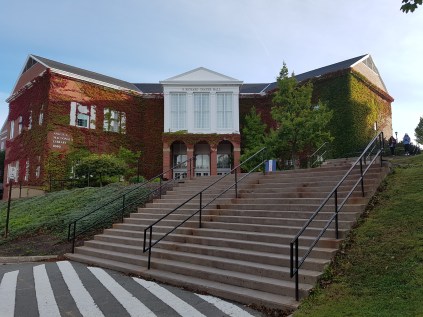
For many,20161001_085739 this week is a homecoming, a return to alma mater, and a time for (enhanced) reflection. I was privileged to have a great educational experience. I am privileged. Period. And I never take that for granted. I have leaned a lot but as I come home and I reflect, here’s what I conclude that I have leaned. Three things…

All people are decent! Despite the hate in this world and all the nasty things that people do to each other, deep inside, at the core, people are decent. To see people any other way serves no purpose. Assume that we are all essentially good even though our actions sometimes suggest otherwise. In the long run, our behaviours at least approach decency, and given enough time we will all get there.

The truth must be told! Although ‘truth’ in the sense of knowledge and science is sometimes hard to know, at least the moral truth is always evident. You can’t hide from it. You need to seek it. There is no point in lying. You may get away with it for a while but it will gradually eat you up inside. You might justify not telling the truth to protect other people. But they can take it. And they’ll forgive you. After all, they’re decent.

Fear is what holds us back! Take a look at anyone with a disability or anyone who has ‘overcome the odds’ and you’ll see someone who has embraced fear. People who are considered as gifted or ‘natural,’ at one time overcame a fear of not meeting rising expectations. If you’re honest with yourself about what you want, big or small, and if you’re not achieving it, you’re probably just afraid. Reaching goals requires that you overcome fear. Get out of your comfort zone and just do what you truly want. If you fail, and you admit it, people will support you. After all they’re decent.

My alma mater has always been a place of learning for me. As I walk around campus, 35 years after being graduated, and ask myself what I have learned, the answer is not in the text books. At least not the business ones. Supply and demand, fiscal policy, sensitivity analysis, cost allocation, debits and credits, strategic frameworks, bla bla bla are all important but they’re not the stuff of life.

Thirty five years on, what I have learned is: All people are decent; the truth must be told; and fear is what holds us back! Now, where was I? Oh yes, I need another drink. Cheers!

Respect Stares Down Ignorance

It seems a car load of people failed social studies and failed society in general when they mouthed off to a man in Edmonton this week.  It’s sad to think that racial slurs continue in Canada (or anywhere for that matter).  We’ve all got some learning to do about how we treat each other and back-to-school season is as good a time as any to refocus on social justice, inclusion, and respect.  It’s time to look ignorance in the eye and stare it down for good.Ignorance

The ignorance demonstrated by the carload of people who slurred Jesse Lipscombe is shocking.  It sends a message about how far we have to go and how much more people like Jesse need to endure until we all treat each other with respect.  I am grateful for having been raised in an environment which promoted respect.  I feel sad for the carload of ignorance in Edmonton which seems to have missed out on that.  We need to help them to be better.  We bear some responsibility for their ignorance and their actions.

It’s one thing to “call it out when you see it,” but it’s another, far more impactful thing to do something about it.  I’m not sure how to do that.  Hopefully, if that moment comes I’ll lean in the way it seems Jesse did.  I’ll look ignorance in the eye and calmly say, “Really?”  I’ll stare it down, with respect.


In Defense of the NS Health Care System

NS FlagThis evening I went to a talk sponsored by the Atlantic Institute for Market Studies (AIMS) held at the Halifax Public Library Main Branch.  The event was attended by about 300 people. The new beautiful building was an appropriate setting to learn about health literacy, and the audience seemed keen to hear from local thought leaders.  Dr. John Ross opened by offering insights about how the health care system is focused on fixing symptoms rather than prevention and how society and individuals should focus more on the social determinants of health.  That made good enough sense to me as an average citizen.  I learned something.  Thanks Doc.  Dr. David Zitner, on the other hand, left me disappointed.  It’s hard for me to argue with what he had to say specifically because his message was not clear to me.  Although he may have been well intentioned his negative tone raised my ire, so much so that I decided to write this blog post.   His talk was riddled with nuance and innuendo about how the Nova Scotia Health Care system is broken.  That’s not my experience.   Here’s my side of that story.

Today I went to visit my oncologist.  Six months ago those were words I never ever thought I’d say, let alone write.  I was in and out of the hospital in 30 minutes.  The meeting was efficient and professional.  And the news was good, so I may be a bit biased.  Yesterday I received my X-Ray results via Health Relay.  That’s the on-line, Nova Scotia government sponsored, web based, electronic medical records system I’ve been using with my family physician for the last 18 months or so.  Health Relay is the system that Dr. Zitner didn’t seem to know anything about when he polled the audience at the beginning of his talk.  He referenced similar information systems in other provinces and countries but somehow overlooked the fact that our province has a perfectly well functioning system today, at least in my experience.   He implied ‘shame on us’ for not having such a system.  Dr. Zitner seemed to have nothing good to say about our health care system.  So here’s more of my story suggesting otherwise.  The X Ray results I received on Health Relay were generated from a visit I had last week to the Dartmouth General where I was in and out of the hospital in about 40 minutes.  I’ve have had longer wait times to mail a parcel with Canada Post during the holiday season.

So here’s my message.  Thank you Nova Scotia for delivering quality health care in a fast and efficient way.  Thank you to the practitioners, the staff, the managers, and yes even to the politicians.  I know my experience is uniquely mine.  I imagine there are many others who have been frustrated by negative experiences from a resource constrained system.   But when good things happen they should be acknowledged, especially when thought leaders we rely on for insight are implying otherwise and focusing on the negative.  With respect, Dr. Zitner, you need some new material.

Weak Ties, Clique Ties, Social Capital, and LinkedIn: What’s with all that?

Social capital is about relationships and your network and how they can help you to get ahead. Right? But what kind of relationships help you the most and where does LinkedIn fit in? Let’s think about that.

Social capital is considered to be any aspect of social structure that creates value and facilitates the actions and objectives of participants in that structure. Social network theorists dub the “ego” as the focal person in a network who is linked to “alters” in that same network and they measure the strength of the links as weak ties or clique ties. Weak ties would be infrequent and lack intensity or emotion. Clique ties are much stronger and would generally involve friends, advisers, and co workers. It’s the weak ties that form the bridges which connect cliques and form your social network.

Ultimately its the resources made available through these networks that contribute to your social capital. Access to information and visibility would be good examples of these resources. Your network, extended through weak ties, gets you access to these resources. Research suggests that weak ties are just as likely to contribute to a person finding a job or finding their next assignment. Clique ties are more likely to be sources of career sponsorship. They are much more intense but are limited in their reach. Given that we all have limited energy it would follow that the weak ties can be more valuable than clique ties. They’re the ones that extend your network.

So where does that leave us with our basic question about LinkedIn? Well here’s a thought. If you want to increase your social capital you need to build your social network and a great way to do that is by developing more ties, even weak ones, as would come from a tool such as LinkedIn. Of course you need to do much more to develop your social capital but making LinkedIn part of your plan makes a lot of sense, and not just because the good people at LinkedIn want you to think that way.

Ties 3

Once you stop learning you start dying

There is lots of graduating going on this month – it’s great to see and experience. Today I will earn a certificate in University Teaching and Learning from Dalhousie. Our godson Andrew will graduate with his first post graduate degree from Dal later this week. Our god daughter will soon graduate from High School on her way to St.F.X. Nova Scotia enjoys a great network of higher education institutions. I’m privileged to be associated with 5 of them as a student, teacher, or both. I thought it might be fun to take a look at the history of these schools and how they came to be. I’ll start with Dalhousie, since they’ll be papering me today, even though Saint Mary’s is the oldest. I’ll also mention Mount Saint Vincent University and the Nova Scotia Community College. Of course I’ll include St.F.X. where it all started for me.

Lord Dalhousie invested 7,000 pounds of Atlantic sea faring taxes to endow what was a college in 1818 at the Halifax Grande Parade. Dalhousie became Lieutenant Governor of Nova Scotia which enabled him to further help the school get established. Teaching began there some 20 years later and about 30 years after that the first students graduated from what was then a university. Around that same time the roots of St. Francis Xavier University were established with the opening of a seminary at Arichat by His Lordship Reverend Dr. MacKinnon. Apparently Bishop MacKinnon later moved the then seminary to Antigonish as a college after which it was established as St. Francis Xavier University. It was affiliated with the then University of Halifax which later folded. St. Mary’s University was similarly part of the short lived University of Halifax. The Saint Mary’s University roots trace back to 1802 when it was a boy’s school on Spring Garden Road which was later established as a college and then a university in 1841. Mount Saint Vincent University was originally an academy started by the Sisters of Charity in 1873 as one of the only places in Canada where women could pursue higher education. It then became a college and its charter as a university was granted in 1966. About 30 years later the Nova Scotia Community College was established in an effort to amalgamate Nova Scotia’s network of post-secondary vocational schools creating a more coordinated and sophisticated network across the province.

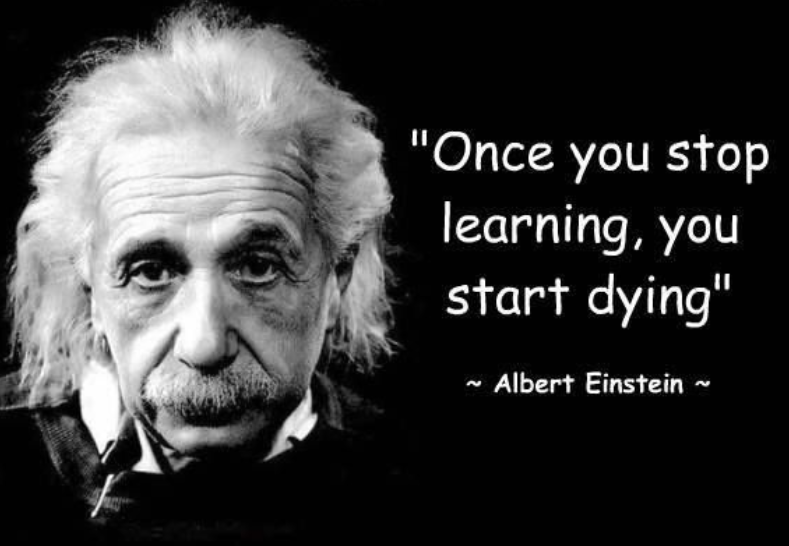
Nova Scotia has a total of 12 universities including NSCC. That’s a lot of schools for a population of less than a million people. Our province is aging yet we are surrounded by learners – generally associated with youth. Albert Einstein once said, “Once you stop learning, you start dying.” Amen Albert.

Einstein

Students success just makes you feel good all over…

Tonight I had the pleasure of watching a success story.  Some students I had the good fortune to work with for a short time walked into the Dragon’s Den on CBC television and walked out with a $500,000 investment in their business.  I knew they were good, really good, but this was validation of the highest order.

About 18 months ago a colleague of mine, Ed Leach, who was teaching a new course, Starting Lean, was kind enough to introduce me to these students and give me an opportunity to work with them.  I learned a ton from the experience.  Most of all I learned that determination pays off.   I watched Cam and Dan push an idea forward.  As their “mentor” I was more of a cheer leader.   They made some predictable mistakes but that didn’t matter.  They pressed on. These were real real entrepreneurs.

I watched 2 very smart, very talented, very determined young men follow their instincts and make things happen.  I connected with them a few times following the conclusion of the course, as the business really got going.  Although their career success was a sure thing, truth told, I thought the chance of success with this venture was 50/50.  Alas I am not an entrepreneur at heart.  I was delighted to see Cam and Dan (and their partner Bobby) successfully pitch and win a big investment on prime time TV.  It was better than seeing the Habs win a big game.   As someone who wants to teach more and more, watching these recent students compete and win for real just made me feel good all over.  Thanks again Cam and Dan!  Even if the deal doesn’t stick, as sometimes happens, you are real entrepreneurs we can all be proud of.

Sage

Thank You Viola Desmond!

I came across this video in preparation for a student discussion.  It’s a very powerful portrayal of a sad chapter in the history of Nova Scotia.  The story is also an inspiring account of how one person changed the world.  Social justice is something many of us take for granted.  We sometimes cheer for social justice as we watch it emerge, often on television or in movies.  That’s OK, and this video may be just that for some viewers but hopefully this story will continue to do much more especially as Nova Scotia Heritage Day approaches.   Social justice is worth fighting for.  Viola Desmond is a great example of someone who stood up for what she knew was right.  She fought for social justice and she changed the world.  Watch her story and follow her example.   http://www.youtube.com/watch?v=yI00i9BtsQ8