A shout out to social entrepreneurs

Social entrepreneurship is hot right now, especially among young people. Its evident in the class room when students talk about business and its evident from the growing numbers of social ventures in our communities. Social entrepreneurship is where monetary profit becomes a tool to accomplish people-centred objectives. More than economic activity, social entrepreneurs give society inspiring world-changing solutions. And we need them now more than ever. Social entrepreneurship matters because it maximizes social benefit for many rather than maximizing profit for a few.

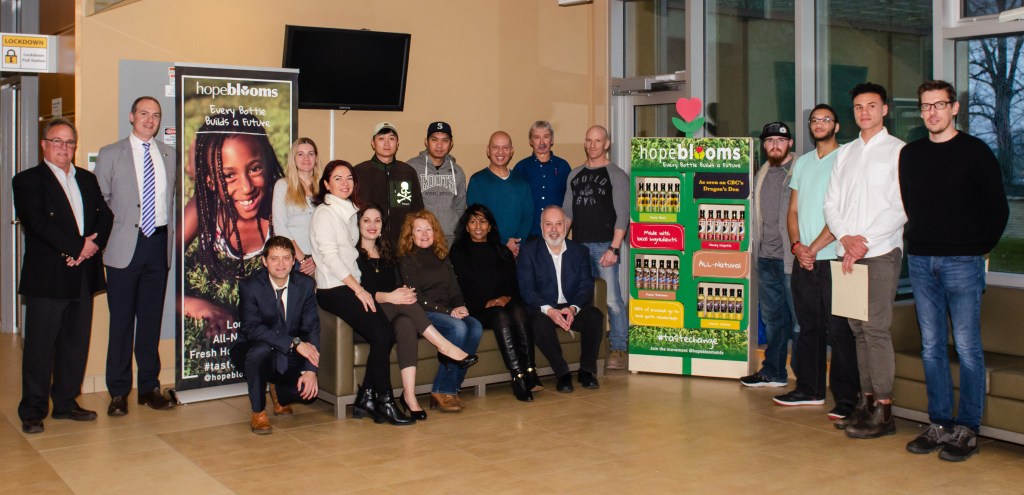
A brilliant example of social entrepreneurship can be found in Hope Blooms who burst onto the national stage in 2008 winning the hearts of Canadians including most of the CBC Dragons. Only Kevin O’Leary was a hold out to their ask, sticking to his oft used excuse that he doesn’t invest in charity. He didn’t get it. Scrooge didn’t either until it was almost too late. The other Dragons were taken by the story, which is now regarded as one of the top ten Dragon’s Den pitches of all time. The Hope Blooms youth who made that first step were not unlike the ones who recently opened up the Toronto market so that Hope Blooms products can now be found at the Loblaws store in Maple Leaf Gardens. They are Halifax inner city kids. They are bold entrepreneurs.

Hope Blooms builds community and change. While they grow, transform, package, and sell food in the form of dressings and teas, what they really produce is people. Hope Blooms alumni are now attending post secondary institutions including Stanford University, University of Toronto, St. Francis Xavier University and others. When shoppers chose Hope Blooms dressings at their local Loblaws store they are investing in future leaders who will soon make our world a better, more inclusive, and loving place. They are investing in social entrepreneurs. Jessie Jollymore, Hope Blooms founder, is a classic social entrepreneur. Her dogged commitment to planting seeds and harvesting dreams is an inspiration to us all. Thank you Jessie and all the social entrepreneurs who are leading change in our economy and our world. Keep up the great work.

Addressing complexity with open design thinking

Sometimes its tough to see the big picture, especially when its really ugly. Our world and everyone in it are facing some ugly problems right now. They are problems that are wickedly unstructured, open ended, multi dimensional, systemic and for which there are often no solutions. Our wicked problems require a new way of thinking and a new leadership paradigm. This week the global climate strikes offered evidence of a wicked problem. Where do you begin? There are so many unique yet interconnected elements each of which seems radically unpredictable. Without directly referencing the science, suffice it to say that the debate, let alone the hope of a solution, seems beyond our control. Don’t despair. Fortunately, this week also offered some hope for our future and not just in the form of #teamgreta and the many brave climate change activists.

systemsinnovation.io

This week three global industry leaders shone a light on a new way of thinking which is credited as the kind of new management approach which our world needs now. Deloitte, IBM, and RBC joined forces to offer Nova Scotia post secondary students a taste of design thinking. The investment which these companies made in developing and delivering the two-day learning event was impressive. The scale of the event was significant, involving about 200 students from five schools all hosted at Saint Mary’s University. Yes the three corporate amigos got to see potential recruits in action and endeared themselves to a cohort of future leaders – the event helped their recruiting efforts for sure but I think the investment goes far beyond that.

Opening up the internal capabilities of these firms for others to learn and apply took a leap of faith for these three industry giants. They offered their know-how and their people in an effort to build community capacity so that we can begin to solve a growing world of wicked problems. The open source nature of the design thinking movement is evidence of healthy corporate values which help to address community and social issues – not just profit. In a world of wicked problems its nice to see some creative solutions emerge. Bravo IBM, Deloitte, RBC and all the student participants who made an investment which will make a difference and some day may get us to the other side of complexity. Post-complexity simplicity here we come!

Do Canadians believe in education?

Most Canadians believe post-secondary education positively impacts the country, is more relevant in today’s rapidly changing world, and makes us stronger in the face of new challenges. A new national survey conducted by Abacus Data for the Canadian Association of University Teachers offers some interesting insights including that 78% of Canadians believe public sector education (PSE) positively impacts the direction of the country

Most Canadians believe PSE is more relevant now than ever. A full two thirds agree that it has never been more important to get a post-secondary education now given the changes in the economy and society.

When told that Canada has the highest rate of residents with a post-secondary degree among comparable countries, two thirds of respondents feel it makes Canada a better place to live, a view that’s held across demographic, regional, and socio-economic groups. Given the importance of PSE in the eyes of Canadians it is likely that it will play a prominent role in the upcoming federal election. Although a provincial jurisdiction, federal policies supporting the sector are likely to be a focus. For more information visit Canadian Association of University Teachers, http://www.caut.ca July 23 post. Photo credit widehdimages.

How should graduate success be measured?

Graduates from Nova Scotia earn about $60K per annum five years after completing their first degree (about 96% of them anyway) according to research conducted by the Maritime Provinces Higher Education Commission in 2018. This is a useful measure, but it begs the question what are the most appropriate ways to measure graduate success? Surely some more subjective factors are considered relevant.

It is generally accepted that careers have an internal and an external dimension. The external dimension relates to the career as perceived by others where the internal dimension relates to notions of self. In addition to compensation, other common objective/ external measures include the number and rate of promotions, span of control, hierarchical level or rank, and perceived importance of job outcomes. Subjective/ internal career success outcomes commonly include career satisfaction, happiness, emotional well being, physical health, and work engagement.

The external career dimension gets the most attention although increasingly research is focusing on the internal dimension. Post-industrial society has experienced changing notions of career success that have coincided with, and may be influenced by a transition in values to a post-materialist view.

An increased focus on self-expression values, subjective well-being, self-expression, and individual spirituality has emerged (Dries, 2011). These values differ across cultures but the transition to a post materialist view has been most evident in affluent societies, such as North American. This transition has challenged ideology, such as “the American dream” and its influence on notions of success.

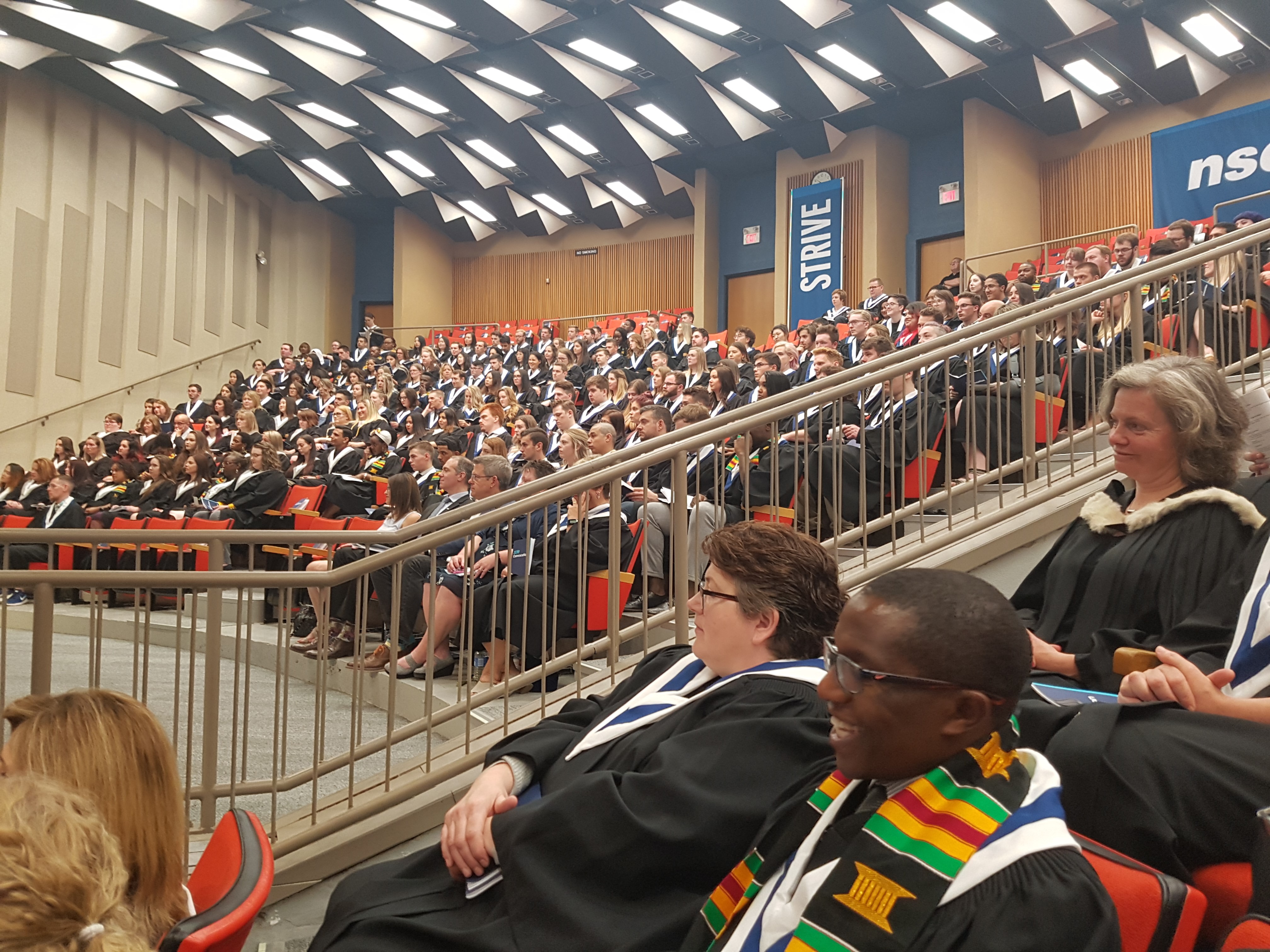
Nova Scotia Community College Convocation 2019

Post-commencement career advancement

There’s a lot of graduating going on these days and more to come.  Bravo to all the teachers and learners who are making it happen.  It’s time for celebration and reflection.  A common commencement address theme is that of the career.  My research suggests that some students don’t think seriously about their careers until long after graduation. My teaching experience is further evidence of this – despite best efforts.  It was also my workplace experience that many people don’t look ahead at their careers. Most people spend more time thinking about jobs.

Recently I asked 48 Canadian senior executives about their careers to identify barriers and enablers to career advancement.  The interviews were quite personal and very reflective.  In many cases these executives from across Canada shared their life stories with me.  Most of these people had achieved career success seemingly by all standards. Following a reasonably rigorous methodology, I identified the most common barriers and enablers to their career advancement.

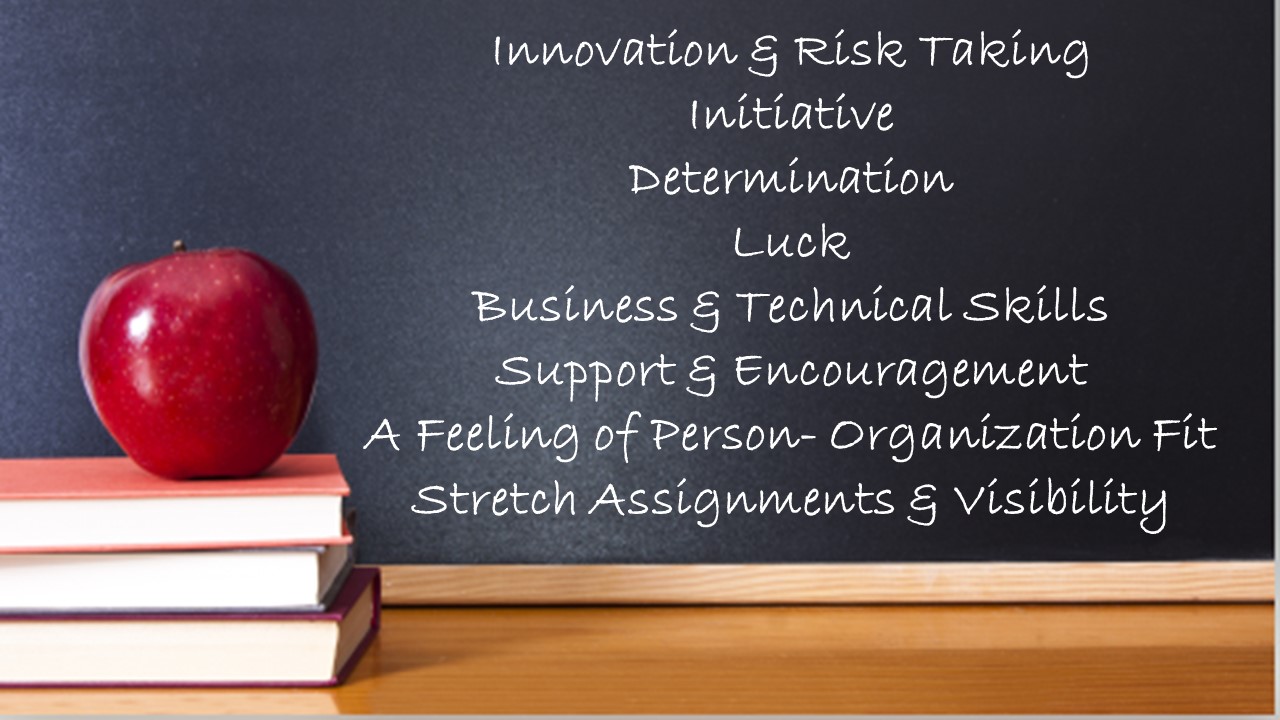
The research considered early career, mid career, and mature career phases.  A key observation from early career reflection was that careers start in school.   Executives considered their early years and education as part of their career story.  At mid career, the most common enablers to career advancement identified in this research were:

Lessons

There were fewer barriers described by participants which suggests an overall forward progression for their careers.  They typically had worked in 5.3 organizations and had 9.3 positions over their careers.  Half had lived and worked in more than one region of Canada. Of the barriers, more were described by women than men.

Career highlites for these executives came from advancing the careers of others and from paying it forward through mentorship.  Mature career reflection featured this theme of sharing career luck with others who are at an earlier career stage. There were a few laments about promotions missed, and money lost but mostly it was full circle, back to commencement, right around when it all began.

So, graduates, soon-to-be graduates, and students consider these two questions:  When did your career start?  What are your emerging career advancement enablers?  Maybe you’re experiencing post-commencement career advancement.

Reflect yes, but don’t beat yourself up

Dwelling on missed opportunities or mistakes is human nature.  A colleague recently lamented that she had left a great job to find a better one, only to realize that the grass was much greener in her original position.  She repeatedly regretted her decision and in some ways was paralyzed by it.  Researchers have found that obsessing over regrets has a negative impact on mood and sleep, can increase impulsivity, and can be a risk factor for binge eating and misusing alcohol (Taitz, 2019).

Abstract lights

Participant memories about negative career experiences were quite clear – even those long ago.  Reflection should be positive.

When asked about career regrets in a study of Canadian technology executives the most common answer was denial of negative reflection, “Oh I don’t dwell on  the past” (Fauteux, 2017).  When pressed during interviews, participants described a range of regrets including assignments not pursued, transfers not accepted, promotions not lobbied for, and other moments in time that could have been (better).  Their memories were quite clear about decisions made long ago.  No doubt you have some career regrets, I do! Its important not to let them get a hold of you.

Psychologists suggest that in order to avoid regret spiral you need to interrupt your negative thought pattern and look to the positive.  Taitz, 2019 describes this as interrupting your obsessing and treating yourself like your ideal mentor would.  Don’t beat yourself up – practice self compassion.  Her science explains once again what we know intuitively but sometimes can’t put into practice – see the sliver lining.  Life long learners who use reflection may know this best – there is positive value in every experience.

Kintsugi is a Japanese art which literally translated means “golden repair.” It is a philosophy of repairing broken things, including imperfections which are considered part of an item’s history.  So, life long learners, take time to reflect, look for the positive in every experience, and repair the broken thing(s) which are part of your career.


An Industry Life Gone Too Soon

I was reminded this week of what it takes to build an industry.  It was an unfortunate collision of academic theory and a real-life story of someone special leaving us too soon.   Industries go through life cycles, from introduction to decline, and a major force of industry growth is the production and diffusion of related knowledge (Grant et al, 2015). Growth Curve

Many textbooks feature images which illustrate industry or product evolution over time, sometimes called growth curves.  The similarity of these growth curves to the cycle of human life was made abundantly clear this week with the passing of an information technology icon.  Rod Wark was a Nova Scotia leader with a global reputation for his significant contribution to the sector’s growth.  He was an early adopter, an innovator, and obsessed with quality.  He led many individuals and organizations through the IT sector’s introduction, growth, and maturity.

Rod Wark significantly influenced the lives of more than 13,500 workers (ICTC, 2015) in Nova Scotia’s IT sector.  But the IT sector is special because of the multiplier effect it has on the economy by enabling the success of other sectors.  Rod Wark made a significant contribution to the growth of the IT sector, its people and companies, but he was also a profound influence on the growth of a much larger business community.  He was a builder, who’s impact should be celebrated and used as a lesson for many, long into the future.

Ten probing questions which seek to understand…

Questioning and listening go together like salt and pepper, or like teaching and learning. They are different sides of the same coin. Effective questioning is dependent on context. There is no recipe for the right question in any given situation. In most discussions, active listening provides the context and leads to the best next question.

Following is a list of ten Questionseffective questions to generate good discussion. These are probing questions which can help to explore almost any issue (Christensen, 2008).

  1. “Why?”
  2. “Could you say a little more about that?”
  3. “What leads you to that conclusion?”
  4. “How did you come up with that?”
  5. “Could you walk us through your thought process?”
  6. “Do you have any evidence to support that?”
  7. “How did you interpret that?”
  8. “What are your assumptions about that?”
  9. “Why is that important?”
  10. “What are the implications?”

Consider these questions the next time you’re in a group discussion in a classroom, at work, or event at the dinner table. Probing questions seek to understand.

Ref: Roland Christensen, 2008, Harvard Business School

Image: http://www.cbs.com


How teams last forever

DSCN4538 (2)Many people around the world are thinking about teams today. These thoughts are rooted in a tragic story but they remind us of a beautiful reality. Teams last forever. I teach management and recently in class discussion we explored the topic of how teams are different from groups. Both groups and teams are very important in management. They both have their place. The intensity of interaction is greater in a team and a team’s vision or purpose is much more specific than that of a group (Jones et al., 2016). So, do teams last forever as the headline in this post suggests? I think so.

I try to be intentional when I describe myself as a team member versus a group participant. I don’t take the team label lightly. Teams have a structure with roles, and norms. We have team captains and we wear team jerseys. We are “mates” in a team. Teams have a higher purpose which can require sacrifice to be achieved, e.g. “She did it for the team.” We trust each other on a team, e.g. “I knew she would be there for me.” We think of teams like we think of family. We are sisters and we are brothers.

I don’t think teams ever stop being teams. Their intensity and their purpose sustain them forever. Once you join a team it will always be part of you, and you will always be part of the team. #jerseysforhumbolt #humboltstrong #nscc

Canadian students: 60% feel hopelessness

Mental health costs the Canadian economy $51 billion per year according to a publication recently released by the Canadian Alliance of Student Associations.  Of 30,00 Canadian college students surveyed about mental health, 60% expressed feelings of hopelessness, and 90% felt overwhelmed.  Unhappiness, anxiety, depression, lost sleep, drinking and alcoholism are symptoms of mental health issues broadly and among students.

If you’re like me you don’t know a lot about mental health.  Despite significant impact on my family, mental health remains something of a mystery to me, so I found the student focused publication interesting.  The provinces of Alberta, Ontario, New Brunswick, and Nova Scotia each contributed Mental Healthto the publication from different perspectives. Following are some highlites.

Until recently mental health promotion in Canada has been lacking. A stigma about talking mental health prevails. Early identification of issues, diagnosis, and mental health care is important. A systemic view of mental health supports is needed which addresses housing, justice, health, workplace, and other domains.  Financial stresses are significant for students so more cost-effective access to post secondary education is seen as part of the solution. Student assistance programs (SAP’s), similar to traditional employee assistance programs (EAP’s), are considered valuable complements to campus based supports provided by institutions.  Government funding of a full range of supports and initiatives is considered key to addressing the challenges of mental health.

Innovative approaches are emerging and are described in the publication.  Three specific initiatives which caught my eye include:  www.jack.org (a national network of young leaders transforming the way we think about mental health); www.defeatdepression.ca/anti-stigma (The Elephant in the Room anti-stigma campaign); and the familiar www.letstalk.bell.ca initiative.  The Canadian Alliance of Student Associations (CASA/ACAE) publication is worth a read, if only to raise your awareness.

Note: The image on this post is taken from the CASA publication