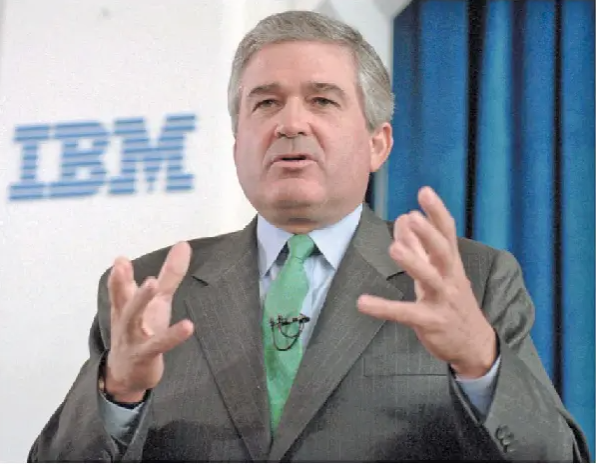
I was saddened to hear of the passing of Lou Gerstner who was CEO of IBM beginning in 1993. He was a powerful force and the first IBM CEO recruited from “outside.” Arguably he saved the company.
For those who didn’t live through it, it’s hard to convey just how close IBM came to disaster in those days – before Lou arrived. I was there. We knew we had a problem. The question was whether we were willing to face it.
I remember a meeting of Canadian sales managers – Toronto, circa 1990 – where a senior executive opened the event by reading a sombre ‘press release…’ IBM was being purchased by a Japanese company. Job loss was inevitable.
You could hear a pin drop.
After a few heavy minutes, the charade was exposed – it wasn’t real. “This could happen, and it will if we don’t change” we were told. It was a powerful lesson in creating a true burning platform.
I joined IBM Canada as a Sales Representative and Sales Manager in 1981, before Lou took the helm. A decade later I later became National Manager of Market Driven Quality. I was on the turnaround team. I remember organizing customer focus groups across Canada. Many were brutal. Customers were angry. We had stopped listening – and it showed.
The crisis wasn’t only cultural. We also failed to fully understand the rise of the PC and the importance of selling services. Big Blue sold big iron. But the market had already shifted. Lou Gerstner understood these forces. He knew that transformation requires a sense of crisis. He forced IBM to confront reality – and change.
IBM was my first real job, and an incredible one for which I am truly grateful. Great customers. Exceptional colleagues. Superior products. And a front-row seat to a remarkable turnaround.
Rest in peace, Lou.
Image Source: Globe and Mail and Kathy Willens/ Associated Press
There’s a grand geo-political redesign in the works or so it seems. The world has lots of moving parts and they’re moving faster and faster these days. Will the wheels fall off? Maybe. I’d like to think not. I’m open to any possibility. Are you?
I read with great interest Andrew Coyne’s opinion piece “The point is not to be different from the States. It’s to be better than them.” I respect the award winning journalist and I appreciate my subscription to his work, but today I struggle with what seems to be his fundamental assertion. Coyne’s piece insightfully analyzes the Canadian identity (crisis). He offers context about Alberta and Quebec (my home province) and their separatist tendencies. He describes Canadian culture and highlites some of the many features of our country including Medicare. Its a great article which I encourage every Canadian to read.
Its Coyne’s assertion that one country needs to be better than the other that I fundamentally question. Many people today are observing challenges to the status quo and digging in their heels to defend their current reality. They seem to be taking hard positions that bold new ideas are just plain wrong. Coyne does a great job of describing a range of possibilities for Canada’s future but seems closed to the idea that a new thing might be better.
There might be a new deal between Canada and the United States that, in the long run, could make the world, and my grandson’s life, better. I want to be open to that. We don’t need to be better than them. And they don’t need to be better than us. We just need to be better (off). All of us.
I’m tired of choking on my breakfast as I read newspapers and yelling at late night TV seeing politicians (and the journalists who help to keep them accountable) dig in their heels. I have a degree of hope that there is a better tomorrow out there and that it could be different from what we know today. We need to be open to that, and we need to listen to the possibilities without dismissing the people who offer them. I have reservations about Donald Trump as do most Canadians that I know. I also have reservations about our current and candidate Canadian political leaders. I’m trying to give them all the benefit of the doubt. And its not easy. I’m hoping that they can lead us all to a better tomorrow, including maybe one that is very different from today.
The world seems to be losing religion. Churches seem less busy, at least when it comes to attendance. That’s my limited Canadian observation. Some researchers observe the same trend typically attributing low attendance to slow recovery post pandemic. My observation also suggests the pews that are full seem to be occupied by older people. The average age in masses today seems to be declining although some research suggests otherwise. I have done rough math a few times and guesstimated a mean age of over 65 years more often than not. That doesn’t seem sustainable.
Last week we celebrated Jesus’ birthday which would arguably lead to more people, like me, thinking about religion related topics. One question I asked myself (and some partying friends) is “why do you go to church?” I found my answer was strongly related to respect for my long deceased parents as the primary reason. While I have faith sometimes I feel more obliged to attend a service than motivated in spiritual ways. I often think of my parents and deceased love ones when at church and, truth told, my mind wanders a lot even when the most compelling pastor is preaching.
My grandson accompanied my wife and I at mass this past weekend. He was precious as always and he actually seemed to enjoy the service. Sometimes just being calm for an hour can be a good thing for children of all ages. Its possible that he might one day attend church regularly although hockey seems to be in the way of that at least for now. Ice time is scarcer than church time. There may be a marketing opportunity in that reality especially for religions and churches.
My mom taught religious education at my high school. She was considered a cool teacher because she taught the origins and the definition of ‘F.U.C.K.’ in her classes since the word has a religious etymology. In the 70’s if you could say that word in your high school classroom it was cool. She got a lot of great feedback from students for more than just being cool. She made a difference in their lives. She loved to teach, she loved her students, and they knew it. My Dad was also greatly appreciated by many of my high school friends not just for being a kind and gentle person but for going out of his way to help them, typically by driving them wherever and whenever needed.
I find myself thinking about my family a lot these days, especially the ones who have died which regrettably for me is the majority. I guess that comes with age. Family thoughts lead me to thoughts about religion or so it seems. No matter what you believe, I believe we’re all God’s children.
Most are familiar with the expression ~ what doesn’t kill me makes me stronger. Many will look back on 2023 with strong memories of painful things. Thinking about those things can hurt like a bad new year’s hangover. It was a tough year from many perspectives. Maybe a cure for that hangover is gratitude.
Lately, gratitude is talked about a lot and is a theme of many social posts. People have tuned into the power of gratitude. Its a popular topic. So is resilience. You don’t have to look far to find suffering these days. There are plenty of circumstances from which people need to ‘bounce back’ at individual, international, and intercultural levels. There seem to be countless things to be overcome lately – for everyone everywhere. The world needs more resilience.
Appreciating what’s good helps to manage through the not so good – the things we need to overcome. Expressing gratitude helps, but more than just feeling grateful – being grateful is the ticket. That’s my experience and what I have observed in many others. Acts of gratitude trump darkness every time. Ongoing authentic expressions of gratitude build resilience. They help you to get past challenges. Gratitude is fuel for your resilience muscle.
So here’s a little new years work out. Be grateful. Express your gratitude. Find some good from all the darkness. Consider what didn’t kill you in 2023, but maybe felt like it might. Be grateful for what didn’t kill you – it gave you insight. You learned something about you and the world by your suffering. Be bright with what you learned from your experiences. Find a way to share what you learned maybe framed as gratitude. Depending on your experience that could be asking a lot. It doesn’t take much to start. The smallest, quietest acts of kindness, born of gratitude, can build the biggest resilience muscle.
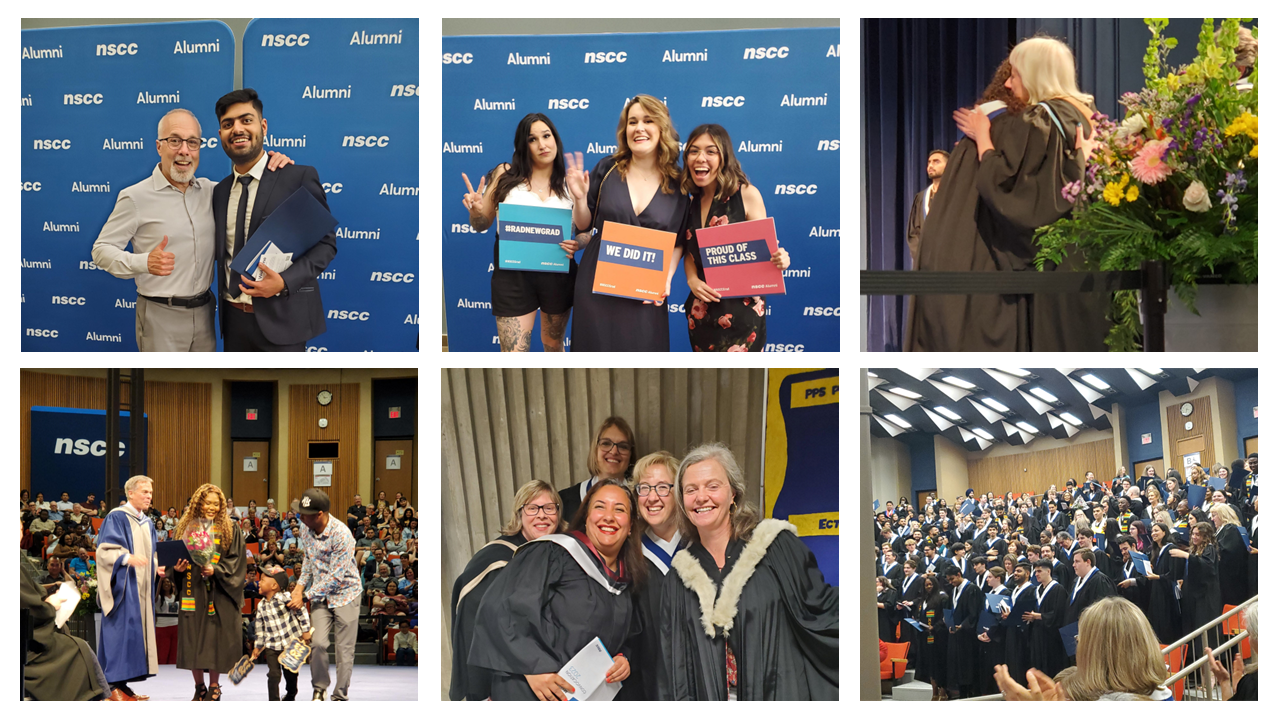
I experienced the euphoria of convocation again this season and I’m a better person because of it. I witnessed and shared in the feeling of pride among the graduates and the community. Its a beautiful thing – finishing. Accomplishments need to be celebrated together, as a community, especially after too many years apart. It was wonderful. And it seemed different this time compared to a few years ago, pre-covid and pre-ChatGpt. The human side of the experience was noticeably more powerful.
There’s a lot being said about artificial intelligence these days especially in education. There was nothing ‘bot ish’ about this convocation. Where ChatGPT seeks to predict, the behaviour I observed at convocation was quite unpredictable – at least less predictable than pre-covid, and pre-ChatGpt. I’ve seen it in business meetings too lately. People didn’t hold back at convocation and they don’t seme to be holding back in general. Fear and futility are the two most common reasons for people not speaking out in organizations. Could it be that people want to speak their mind and they are less afraid of the consequences? Could it be that they are bustin’ out? I think so, and its likely that they expect their feedback will be heard and acted upon.
Lets assume there is a shift underway towards people wanting to speak up and speak out more. What would organizations and leaders need to do differently to succeed in that new world? Well, they would probably need to get better at listening. And they seem to be trying. I have repeatedly observed increased effort among leaders to actively listen in large face-to-face settings. They are listening for what the future holds and how to get there first. They are listening with innovative tools like Design Thinking. They are listening for for what customers say, think, feel, and do. They are listening to find solutions. That’s what (good) leaders do.
The tools we may need now more than ever (i.e. more than ChatGPT) relate to human communication and relationships. Increasingly I apply the Haven Communications Model but alas I am a novice. Purposeful human centered interaction is as important as it is unpredictable now. Design Thinkingincluding applying related tools made available from IBM are very appropriate now as powerful listening frameworks. These real intelligence tools all require work. Artificial intelligence could not predict what I felt at convocation nor what I chose to share in large group problem solving meetings. AI can’t make judgements and have a sense of timing, or nuance, or fun. That’s where we humans come in. Hi, its me, I’m the problem its me. As machines get better with the easy stuff we humans need to get better at the tough stuff, the human stuff, the full catastrophe.
In a few years I’m confident that society (and my students) will have figured out how to get the most out of emerging AI tools like ChatGPT. I’m also confident that in a few short years the currently evident abundance of leadership listening will wind down. By then followers will expect that their leaders to take action – to change and improve. Better an OK strategy well executed than a perfect one not done. “We value your input and intend to take action based on your feedback.” These are important but dangerous words for leaders post-covid and post-ChaptGPT. They may be met with a follower’s response, “Thanks for asking, and for listening, now where’s the action and the payback?” If followers see no action or results after speaking up they will inevitably reach one of two conclusions. “I won’t waste my voice anymore,” or “I’m gone.” That’s not the kind of graduation leaders are typically looking for these days.
A senior executive once described her career as “remarkably tougher than that of my male counterparts. All of them.” Science says she’s in the majority, at least when it comes to male dominated sectors of which there are far too many. Research says senior executive women in the technology sector feel career drag because of their gender (Fauteux, 2017). Progress has been made but the gap persists. Like many I look forward to the day when the reality of equity and diversity is here. Alas it’s not here yet. You don’t need to look far to find local examples of what is all too visible around the world. Its tough for women and girls.
We know that there is a gender gap in the tech sector, especially in the senior ranks, yet we seem powerless do do much about it. One reason we sometimes avoid the ‘dirty little secret’ relates to our fear of overcompensating. ‘If our affirmative action goes too far then we’d just tip the scales the other way and that’s not equity, yada yada.’ So we do less or little.
Today on International Women’s day lets try to “give a little push” to what seems to have been screwed up otherwise. Lets find small (and big) ways to tip the scales more towards equity for women and girls, and in general. Let’s say something or do something that might feel uncomfortable to us in the interest of advancing women. These suggestions are especially for men, today, but they apply to everyone always (at least a bit).
Try using pronouns in your stories of ‘she/ her’ instead of ‘he/him.’ When you tell a story about Steve Jobs, mirror it with a story about Ursula Burns. When you walk into a room of 90% women, notice that, and do something to make it better. If you have oversight of salaries take a closer look to ensure your organization has achieved pay equity and not just talked about it. And finally, offer opportunities and encouragement to women and girls. Sometimes just a little push in the right direction can make a big difference.
I can’t write a post to support women on International Women’s Day without acknowledging two especially amazing women – my wife Mary and my daughter Julia. I am blessed to have you in my life. We are all blessed to have you in this world. Thank you for being my inspiration and for being shining examples of hard work, dedication, and love.
A student once asked me if they ‘really’ needed to buy our course textbook, hoping to buy a pair of children’s birthday shoes instead. I loaned the text. About that time I met David Porter, Ed.D. and learned about Open Education Resources (OER’s i.e. good quality and freely accessible textbooks). Since then I have been an advocate for OER’s and the idea of students curating them.
We have made lots of OER progress in Nova Scotia including at Nova Scotia Community College – NSCC, of which I am very proud. Today, in the middle of Open Education Week, my appreciation goes to British Columbia and open.bccampus.ca. Thank you for leading the way!
Check out the BC story about their 10 year journey with OER’s and then check back here for NS news in a couple of years. Quality, free, and coast to coast!
Extinguishing leadership behaviour is said to demotivate a team – like putting water on a fire. Whether you study leadership or not that can be a painful thing to observe and worse to experience. The ‘fire inside’ individuals weakens, and the energy level among the team members is drained bit by bit. Sadly, it happens a lot especially when managers are not well suited for the job. Which also happens a lot. In most organizations there are heroes who help the team push past the leadership void. And sometimes there are leadership turn arounds where the extinguishing behaviour is discovered and ended.
In large matrixed professional organizations there can be many leadership successes as well as gaps and inconsistencies. Followers increasingly hold their leaders to account including how leaders carry themselves – how they set the tone. Science suggests good followship in a professional setting involves followers asserting themselves. Good leaders get the message but what happens when they don’t? One possibility is that trust for the leader erodes. A feeling of futility among the followers fuels a leadership death spiral and eventually the leader’s messages fall on deaf ears. When a leader is tone deaf to how their team is feeling about their leadership the team finds a new de facto leader for matters not requiring position authority. Follow-to-rule attitudes develop – kind of like work-to-rule but of the heart and mind not the body. As a leader s/he’s “dead to me” becomes more palpable. It stands to reason in this situation that the team’s performance would decline.
There’s another narrative that could emerge from a leader’s failure to spark their followers – when leaders who aren’t leading well do get the message from the assertive unhappy professionals. The starting point for this better leadership story is a leader head-shake and acceptance of the likelihood that something’s wrong and its time to eat some humble pie. The key ingredient here is respect.
When leaders become disconnected from the team and followers show signs of declining trust maybe its time for some simple respectful listening by the leader. “You’ve stopped speaking up. We need you to speak up or we’ll lose the customer perspective. I’m not sure I’m giving you what you need or supporting you the way you need right now. What do you need from me as a leader?”
There’s no script for these situations – they’re all different but the starting point is the realization that, its (probably) you leader! Take a deep breathe and respect the years of experience on your team, especially in a professional setting where the followers often know much more about the core business than you do as leader. If its not your style as leader, if you’re an introvert in a sea of extraverts for example, then get to work on how you can warm up to your team of professionals. Learn and practice listening with respect. Leaders in tough situations like this had better figure it out fast or risk the death spiral of ‘follow-to-rule’ among your team of professionals. Listen, feed the fire, and make it a leadership turnaround instead of becoming ‘dead to them.’
It’s September! While we respect (today) Labour Day as a day to celebrate workers’ rights, we also get excited about tomorrow when we get to practice our trade. At least I do. I’m a teacher and school’s back baby! I’m giddy with excitement. Microsoft Teams was great but now we’re back to face-to-face teaching and learning.
Now I get to do really important work with amazing real (aka not digital) people in an amazing real building (aka not my home office). Digital tools bailed us out and are here to stay but real people face-to-face is where its at for me now! I’m ready now. It just doesn’t get any better than that. Pinch me!
I’m feeling really good about what post pandemic teaching and learning will be like. Welcome back!!!
When presented with new challenges or opportunities people often say something like, “I’ll get to that when things settle down.” No, they won’t. That response generally means they’re more focused on the now and not embracing the future. They’re like still water. Successful organizations, teams, and individuals are in a constant state of change. They’re like rippling water.
There are lots of good reasons why organizations, teams, and individuals don’t change. Fear of the unknown is a common reason cited. People are often in a comfort zone where their desire to change is outweighed be whatever is holding them back. They’re stuck. They need a rippler.
Say, for example, there’s a new system being implemented at a workplace. The old system has been in place for many years, and a common lament from team members is, “it works just fine.” For them to leave their comfort zone and embrace the new unknown system something special needs to happen. Most importantly they need to see movement towards the new system by their leaders and their teammates. They need to see the ripples of change. That’s not an easy thing to create but it can be done. Its called change management.
There are many change management theories and methodologies. They are generally grounded in social science and are often both academically pure and commercially successful. Many PhD’s have been earned answering questions about change management and many consulting fees have been paid for helping to manage the people side of change. One common theme seems to be that someone needs to start the change wave which is sometimes referred to as change sponsorship. The higher up the organizational hierarchy, the better the impact of change sponsorship, but it needs to start somewhere. Someone needs to drop a pebble in the still water and make the water move for others to notice. That’s when their desire to participate in the change increases, and generally that’s when they begin to “get it and get with it.” There needs to be a rippler.
So, ask yourself, when it comes to change are you a rippler? If you think you might be, then consider learning more about change and change management. There are many great resources available to help you become a change manager. Dr. John Kotter developed a highly regarded change process as did Jeffrey Hiatt and Tim Creasy who founded a research and training organization dedicated to change management. Check out their stuff. Maybe you’ll become a (better) rippler!